There’s something about the transition into winter that asks us to slow down. The mornings become darker, the evenings draw in earlier, and suddenly the idea of leaving the house after work feels considerably less appealing than it did a few months ago.
I love the excitement of a new season, but I’d be lying if I said I always found the transition into winter easy. In the past, I’ve really struggled with my mood during the darker months, and I’ve experienced periods where the lack of daylight and drearier weather seemed to affect almost every part of my everyday life.
I remember times when all I wanted to do was stay at home and not see anyone other than Nathan. I felt unmotivated and low in mood, almost as though there was nothing to look forward to. Every day started to feel repetitive, and I found myself missing the light in my life, both literally and figuratively.
Then, every so often, the sun would make an appearance. And it was remarkable how differently I could feel. Suddenly, I felt like a completely different person: happier, more motivated, embracing the day and radiating joy. It really brought home just how much the changing seasons and daylight could influence how I felt.
For some people, this feeling goes beyond simply missing the sunshine. Seasonal Affective Disorder (SAD) is something I’ve become increasingly interested in understanding, particularly because it can have such a significant impact on everyday life.
But I’ve also come to appreciate that winter doesn’t need to be a season we simply endure until spring arrives.
Perhaps there’s something to be said for adjusting our expectations, being a little kinder to ourselves and finding ways to enjoy the season we’re actually in.
From understanding how reduced daylight affects our bodies to creating little rituals that make the colder months feel more enjoyable, here’s how I’m approaching winter wellness.

Why Winter Can Affect How We Feel
Have you ever noticed how much harder it can be to get out of bed on a dark winter morning? Or how your motivation seems to disappear when it’s cold, grey and raining outside?
There’s a reason the changing seasons can influence how we feel.
Our bodies are naturally responsive to light and darkness. Daylight helps regulate our internal body clock, also known as our circadian rhythm, which influences our sleep-wake cycle and other everyday processes.
When daylight hours become shorter, our exposure to natural light decreases. This is thought to influence the hormones and brain chemicals involved in sleep and mood, including melatonin and serotonin.
The NHS explains more about the relationship between reduced daylight, sleep patterns and mood in its guide to Seasonal Affective Disorder.
It’s one reason why some of us might feel sleepier, less motivated or more inclined to spend our evenings curled up indoors during winter.
There’s also a behavioural side to it. Colder weather and darker evenings can make outdoor activities less appealing, meaning we naturally spend more time inside and sometimes become less physically active.
And while there’s absolutely nothing wrong with enjoying a cosy evening at home, it’s worth recognising that reduced daylight and changes to our usual routines can influence our wellbeing.
Understanding Seasonal Affective Disorder (SAD)
Seasonal Affective Disorder, commonly known as SAD, is a type of depression that follows a seasonal pattern. It’s most commonly associated with autumn and winter, with symptoms typically improving as the days become longer again in spring and summer.
It’s sometimes casually referred to as the winter blues, but SAD is more than simply feeling a little gloomy when the weather is miserable.
Symptoms can include:
- Persistent low mood or feelings of sadness.
- Losing interest in activities you would normally enjoy.
- Feeling unusually tired or sleeping more than usual.
- Difficulty concentrating or finding motivation.
- Increased appetite or cravings, particularly for carbohydrate-rich foods.
- Feeling anxious, irritable or withdrawn.
- Feelings of hopelessness or worthlessness.
I think it’s important to recognise that everyone’s experience is different. Not everyone who feels a little less energetic during winter has SAD, but if you notice a recurring pattern that affects your everyday life, it’s worth speaking to your GP.
Having struggled with these feelings myself in the past, I know how frustrating it can be when your mood doesn’t seem to match what you think it should be.
For me, it wasn’t necessarily one big thing. It was the combination of wanting to stay indoors, having little motivation to make plans, feeling low and finding that the days all seemed to blend into one another. I could almost feel myself waiting for something to change.
And then, on those rare sunny days, it was as though someone had switched the lights back on. I wanted to get outside, see people, make plans and enjoy life again.
That contrast made me realise how much I value daylight and how important it is to pay attention to the way the seasons affect my wellbeing.
And that’s the thing about mental health: it isn’t always something we can simply think our way out of. Understanding what’s happening can be a helpful first step towards finding the right support.
Small Ways to Support Your Winter Wellness
There isn’t one magic solution to feeling better during the colder months, but there are a few things that can help us look after ourselves.
I like the idea of approaching winter wellness through small, manageable changes rather than creating an enormous list of things we suddenly feel obliged to do.
1. Make the Most of Natural Daylight
If there’s one thing I’d encourage during winter, it’s making the most of whatever daylight we can get.
When the mornings and evenings are dark, it’s easy to go from the house to the car, spend the day indoors and return home without really experiencing any natural light.
Even a short walk during your lunch break can be worthwhile. Open the curtains as soon as you wake up, sit near a window when working from home or take a little time outside during daylight hours.
It doesn’t have to be a long walk or an ambitious outdoor adventure. Sometimes simply getting outside for ten minutes and taking a breath of fresh air can make the day feel a little different.
2. Consider a SAD Lamp
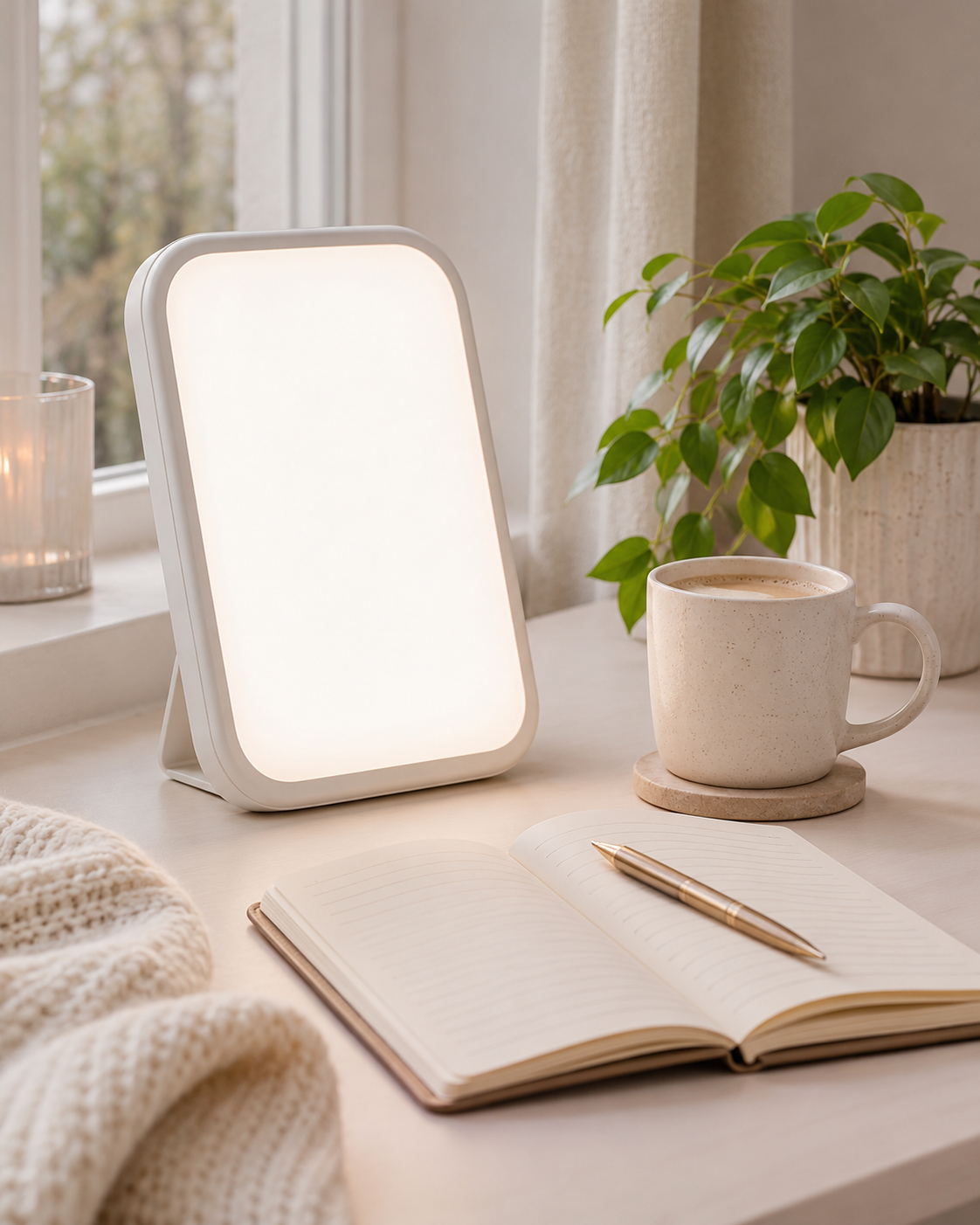
Light therapy is one of the approaches used to help manage winter-pattern SAD.
A SAD lamp, also known as a light box, provides bright artificial light designed to simulate some of the effects of natural daylight. It’s typically used in the morning, with the aim of helping regulate the body’s internal clock.
If you’re considering investing in one, the NHS advises looking for a light box with a brightness of 10,000 lux, which is UV-free and carries a UKCA or CE mark. You can read the NHS guidance on light therapy for SAD here.
3. Don’t Forget Your Vitamin D
Vitamin D is particularly relevant during the autumn and winter months.
Our bodies produce vitamin D through exposure to sunlight on the skin, but in the UK, sunlight isn’t strong enough for most people to make sufficient vitamin D between October and early March.
The NHS recommends that adults consider taking a daily supplement containing 10 micrograms (400 IU) of vitamin D during autumn and winter.
4. Keep Moving, But Adjust Your Expectations
I’m not going to tell you to get up at 6am, smash a workout and completely transform your routine during the darkest months of the year. Sometimes, that simply isn’t realistic.
But movement can be beneficial for both physical and mental wellbeing, and it doesn’t need to look the same throughout the year.
Perhaps summer is for longer walks, outdoor workouts and exploring somewhere new, while winter is for Pilates at home, a gentle yoga session or a short walk wrapped up in your favourite coat.
The important thing is finding something that feels achievable. You don’t need to do everything. A little movement is still movement.
5. Prioritise Sleep and Nourishment
When the evenings get darker, it’s tempting to let our routines slip. We might stay up later than intended, snack our way through the evening or struggle to maintain a consistent sleep schedule.
Rather than being overly strict, I think winter is a lovely opportunity to become a little more intentional about the basics.
Try to maintain a fairly consistent bedtime and wake-up time, eat regular nourishing meals and make space for the things that help you unwind.
Think warming soups, comforting homemade dinners, seasonal vegetables, herbal tea and a little less rushing around.
It’s not about following a perfect wellness routine. It’s about giving your body what it needs to feel supported.
Are We Naturally More Inclined to Slow Down in Winter?
There’s a reason the idea of hibernating through winter sounds so appealing.
Of course, humans don’t technically hibernate. We’re not biologically programmed to disappear into a cosy nest until spring, but our relationship with the seasons is more significant than we sometimes realise.
For much of human history, daily life was shaped by natural light, weather and seasonal availability. People had to work around daylight hours, adapt to changing temperatures and make use of whatever resources were available.
Modern life has changed that considerably. We have artificial lighting, central heating, supermarkets stocked throughout the year and work schedules that rarely change with the seasons.
We can maintain almost exactly the same routine in December as we do in June, even though our environment looks and feels completely different.
Interestingly, research does suggest that human sleep and activity patterns can vary throughout the year.
A 2021 systematic review and meta-analysis of 17 studies found seasonal differences in sleep and physical activity, including a tendency towards more sedentary behaviour during winter. A more recent study analysing millions of nights of sleep data also found that people in the Northern Hemisphere slept around 15–20 minutes longer during winter.
These findings don’t mean we’re supposed to hibernate, but they do suggest that our bodies and behaviours can respond to seasonal changes.
You can read the research here:
- Annual, seasonal, cultural and vacation patterns in sleep, sedentary behaviour and physical activity – systematic review and meta-analysis (2021).
- Variations in sleep duration and timing: weekday and seasonal variations in an analysis of 73 million nights (2025).
I find that interesting because it makes me question whether we’re sometimes too hard on ourselves for wanting to do less during winter.
Perhaps it’s not always a lack of discipline or motivation. Sometimes we’re simply responding to a different environment.
That doesn’t mean we should completely abandon our routines or spend three months under a blanket, but it does make a case for allowing our habits and expectations to shift a little.
Romanticising the Everyday: Finding Joy in the Winter Months
One of my favourite things about seasonal living is finding ways to make each part of the year feel special.
Winter has so much to offer, even if the weather isn’t always particularly inviting.
It’s the season of cosy evenings, beautiful decorations, candlelit dinners, festive markets, chunky knitwear, warming drinks and little traditions that give us something to look forward to.
It’s also a time filled with celebrations and opportunities to connect with the people we love.
Whether you’re celebrating Thanksgiving, enjoying the excitement of Black Friday, decorating your home for Christmas or simply looking forward to a few quieter days over the festive period, there are so many ways to find joy in the season.
For me, romanticising the everyday isn’t about making every moment picture-perfect. It’s about noticing the little things that make ordinary days feel special.
A slow Sunday morning with nowhere to be. Fresh bedding and an early night. Cooking something delicious while listening to music. Watching a Christmas film with someone you love. Taking a solo afternoon to read, have a long bath or simply do absolutely nothing.
And if you love the festive excitement, embrace that too.
Put the decorations up early, visit the Christmas markets, plan a dinner with friends or spend an afternoon browsing the shops. You don’t need to justify enjoying the things that make you happy.
Winter doesn’t have to be all grey skies and gloomy afternoons.

Give Yourself Permission to Slow Down
I think one of the biggest pressures of modern life is the expectation that we’re always supposed to be doing something.
Working towards the next goal, planning the next trip, improving ourselves, being productive and making the most of every spare moment.
But perhaps winter is a good time to question whether we need to maintain that pace all year round.
There might be weeks when you feel motivated, full of energy and ready to take on the world. And there might be others when you’d much rather spend your evenings at home, see fewer people and give yourself a little breathing room.
Both are okay.
If you want to spend more time alone, do that. If you want to fill your calendar with festive plans and social occasions, enjoy them. If you want to spend a weekend indoors with your favourite people, make the most of it.
There’s no single right way to experience winter.
Of course, if you’re struggling with persistent low mood or symptoms that are affecting your everyday life, please don’t feel you have to simply accept it as part of the season. Reaching out for professional support is an important part of looking after yourself, too.
But for the everyday ups and downs, I think we could all benefit from being a little more forgiving.
Final Thoughts on Winter Wellness: Learning to Love the Season We’re In
I’m learning that looking after our wellbeing isn’t about trying to feel our best every single day. It’s about recognising what we need, making small adjustments and giving ourselves permission to experience life at a different pace.
Winter might not offer the long evenings and sunshine of summer, but it brings its own kind of beauty.
It’s a chance to reconnect with home, enjoy slower mornings, spend meaningful time with loved ones and appreciate the little rituals that make everyday life feel special.
And if you’re finding the darker months difficult, remember that you’re not alone. There are practical ways to support your wellbeing, and help is available if you need it.
So, light the candles, make the hot chocolate, enjoy the festivities, get outside when you can and don’t feel guilty about the occasional lazy afternoon.
You don’t have to spend winter waiting for spring.
Sometimes, the most meaningful thing we can do is learn to embrace the season we’re in.



Leave a Reply